
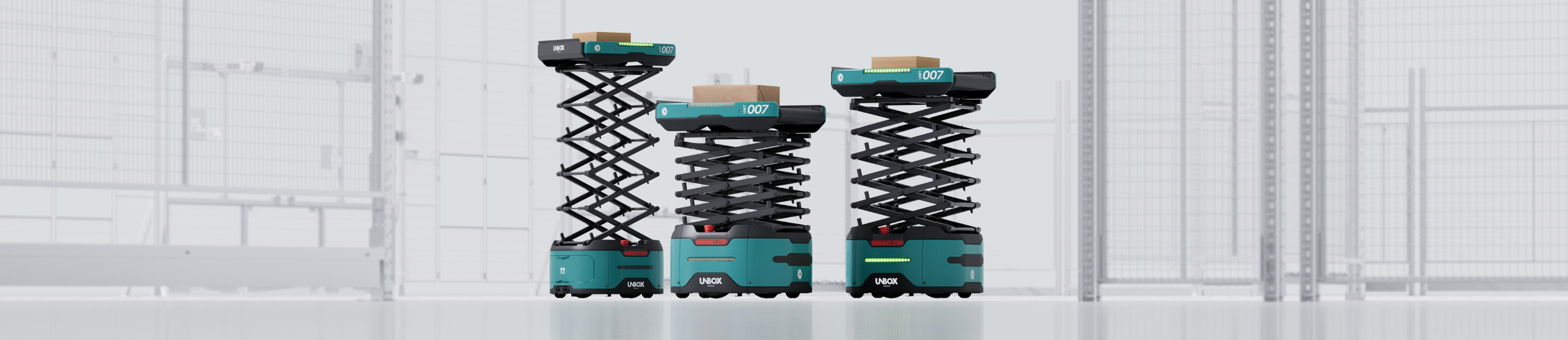
Over the last nine months, Hyve Studio has delivered 53 projects and 131 individual assets for Unbox Robotics, across 17 formats and six disciplines: technical 3D animation, 3D renders, case studies in print and film, trade show stands, LinkedIn content, and brand and product design. The full breakdown sits in our Unbox Robotics case study. This piece is about something the numbers don't show: why the work got sharper, faster and more consistent the longer we did it.
Unbox builds robotic parcel sortation systems for warehouses and logistics operators. In this category the product is rarely a single machine. It is a system of robots, induction stations, weighing and dimensioning modules, binning, charging and safety barricading, and the value lies in how those pieces work together on a busy floor. You cannot design well for that until you understand it.
Most briefs in robotics arrive as a request for an asset: an animation, a deck, a booth backdrop. The risk is treating each one in isolation and designing for how it looks rather than for what it needs to explain. A sortation buyer, whether an operations head, a hub manager or a procurement team, is judging throughput, footprint, labour, safety and how quickly a system can be deployed. Design that doesn't speak to those concerns is decoration.
So the real work started before the first frame: learning the parcel flow end to end. How a parcel is inducted, weighed, dimensioned and assigned a destination. Why multi-level binning matters in a facility where floor space is the constraint. What separates mid-mile from last-mile sortation, and why order consolidation and space optimisation are the topics operators actually care about. That vocabulary became the brief behind every brief.
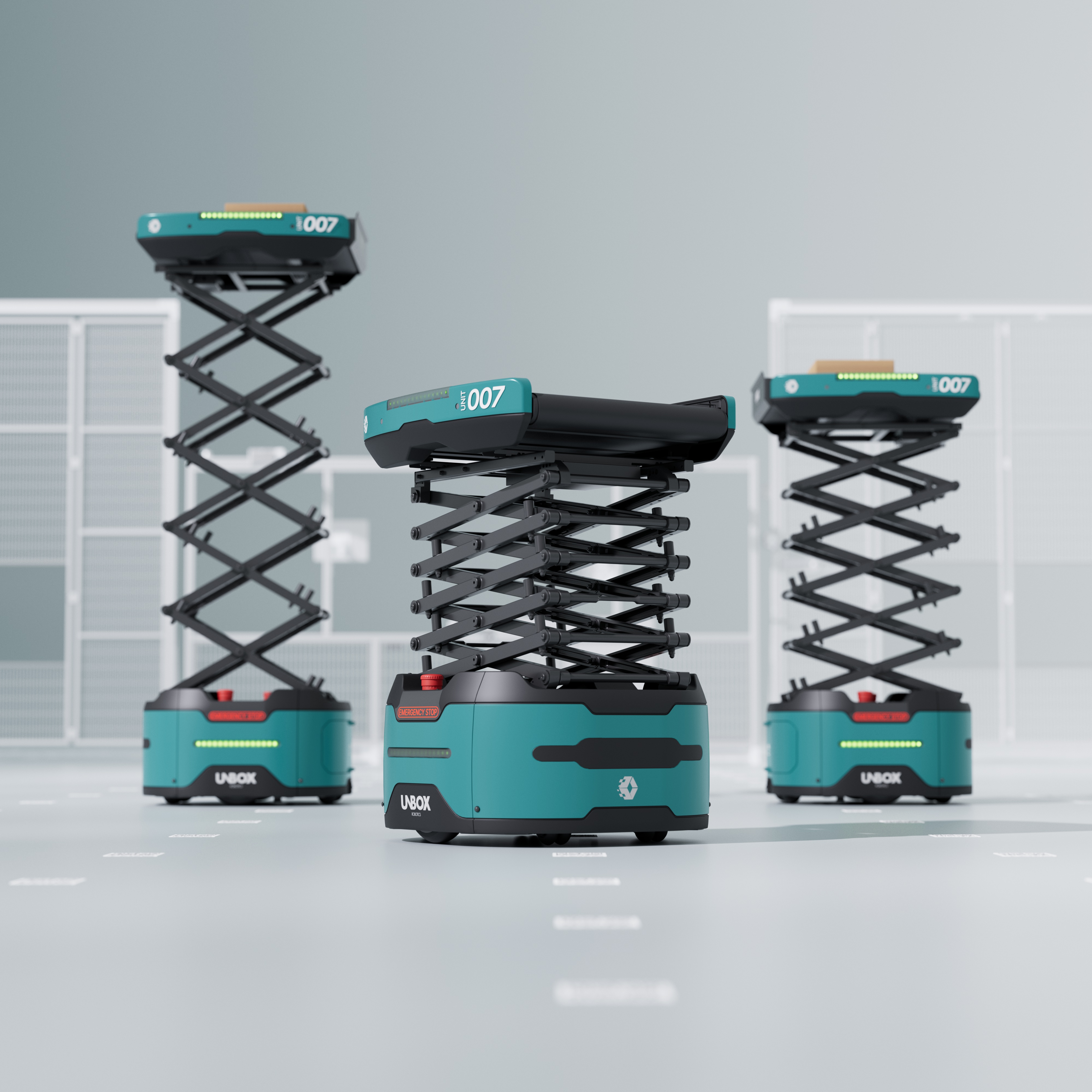
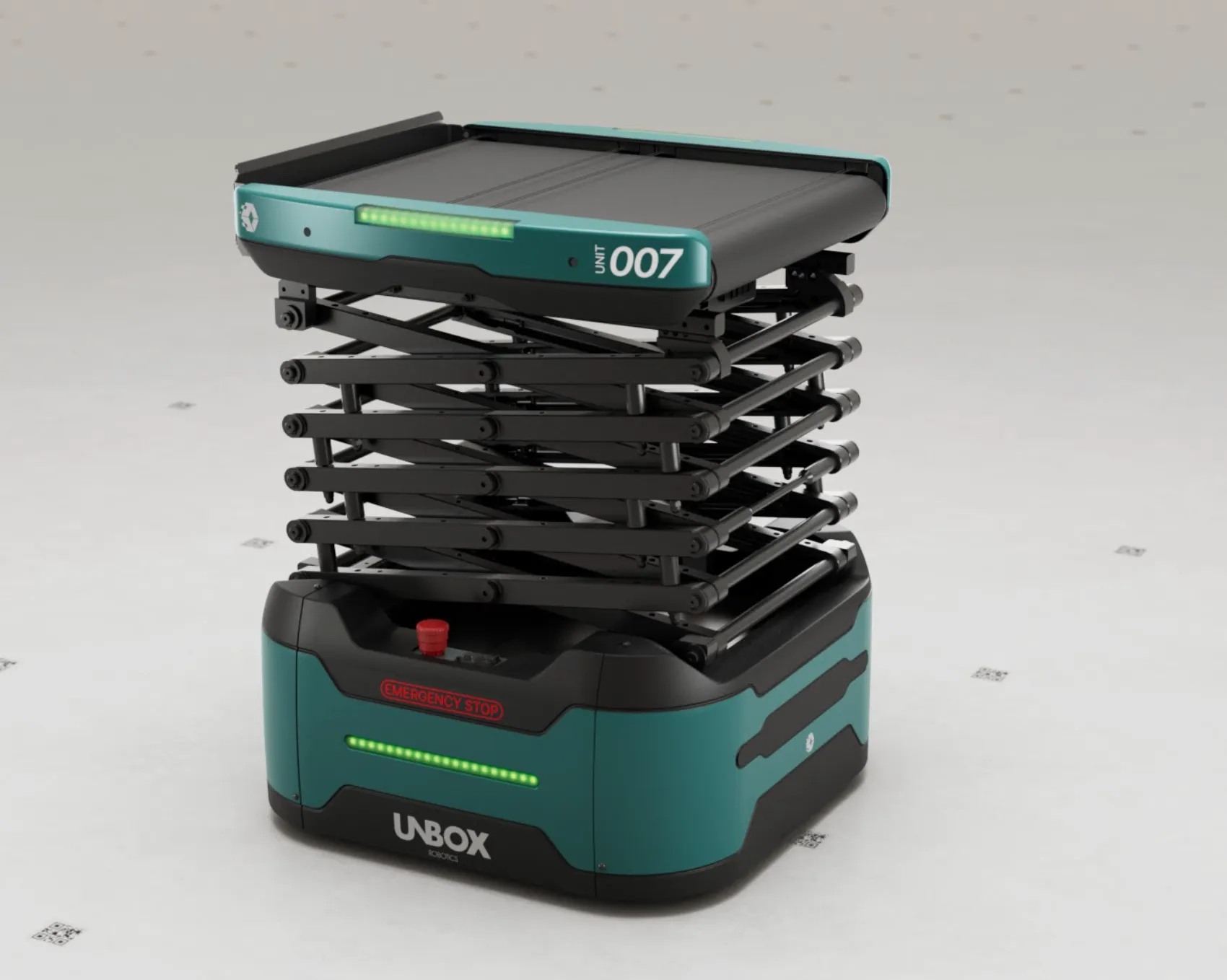
The 13 technical animations, more than 180 seconds of product animation, were structured the way a sortation system is structured. Base animations isolate one component at a time: the sorting robot, the SR450, SR550 and SR650 loops, the auto induction station, the weighing and dimensioning modules, the smart charging station, and robot entry and exit through safety barricading. Advanced animations then bring those components together into a solution overview, an induction sequence and a human-entry safety scenario.
That two-tier structure came directly from understanding how Unbox sells. A sales conversation might need a four-second loop of one robot model, or a complete solution overview. Because every animation shares one 3D build, both are always available, always consistent, and reusable across the website, decks, video edits and exhibitions.
Knowing the industry also decided what to emphasise. Safety barricading got its own films because a robot fleet sharing space with people is one of the first things an operator asks about. Charging got its own because uptime is the question that follows.
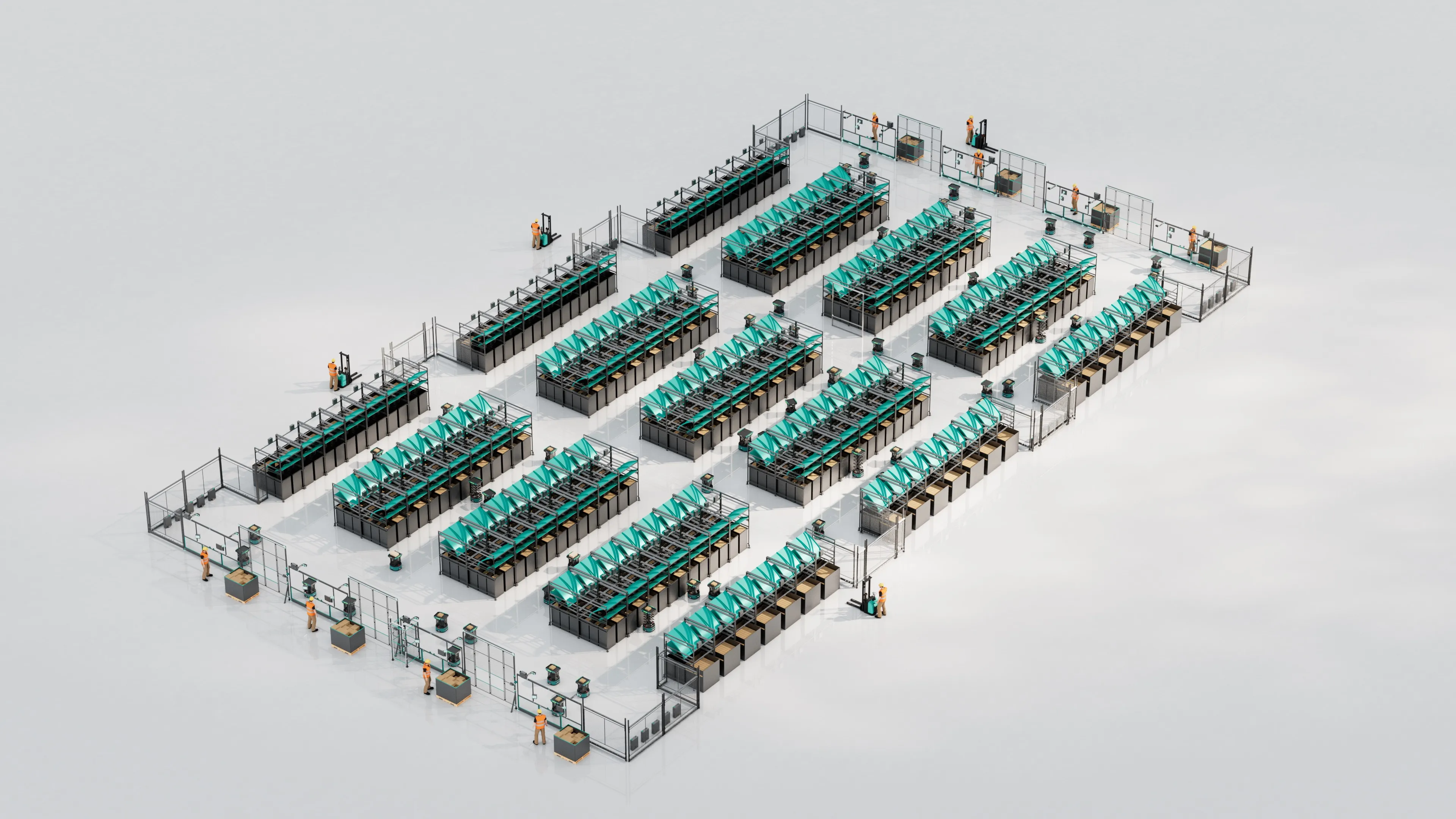
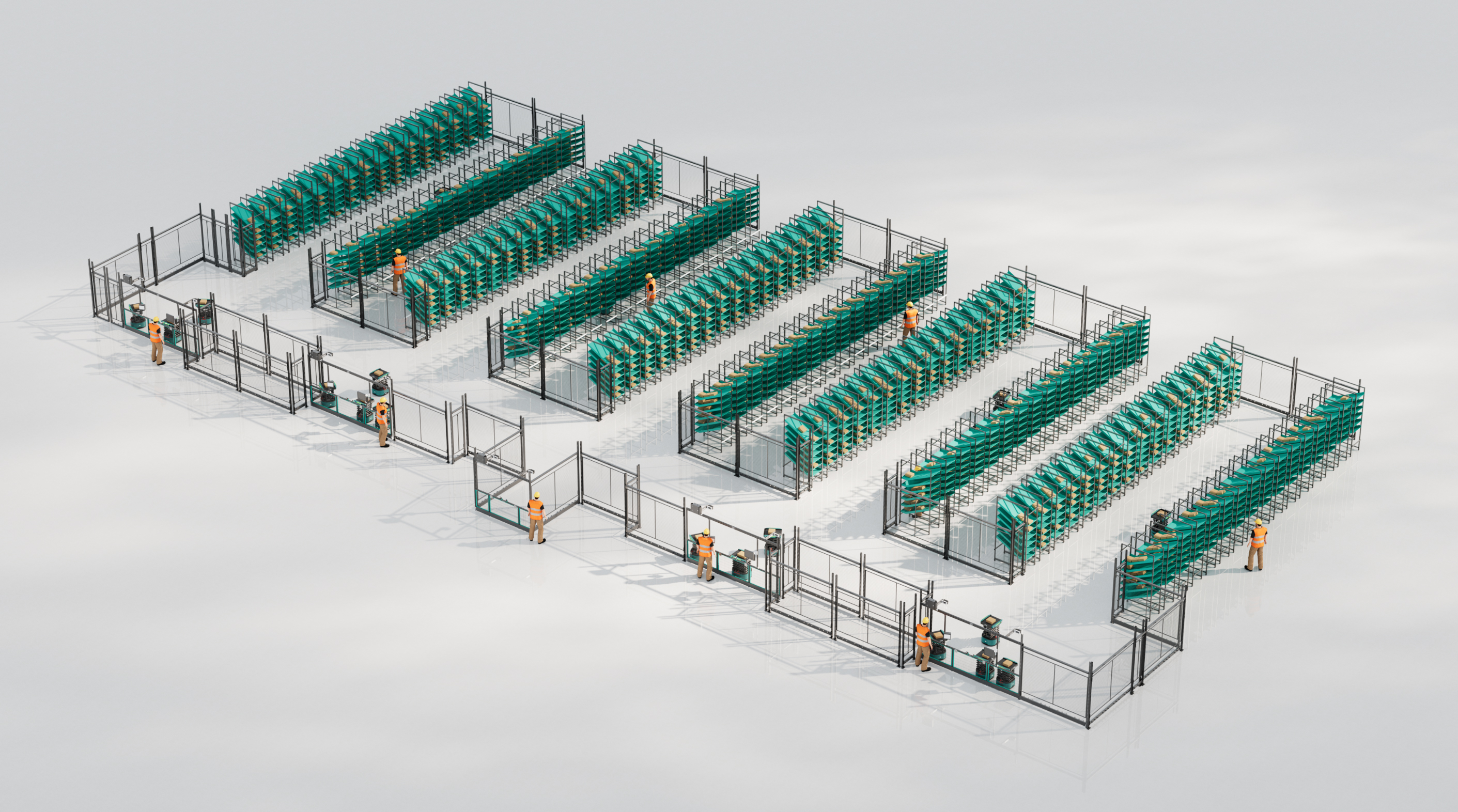
A warehouse photograph shows one corner of a facility. A buyer evaluating sortation wants to understand the whole layout: where parcels enter, how robots travel, where they exit and how much floor it takes. Our 10 renders, a high-fidelity hero backdrop and nine solution layouts, were built to answer exactly that, and became a shared image set across Unbox's website, sales decks and exhibition graphics.
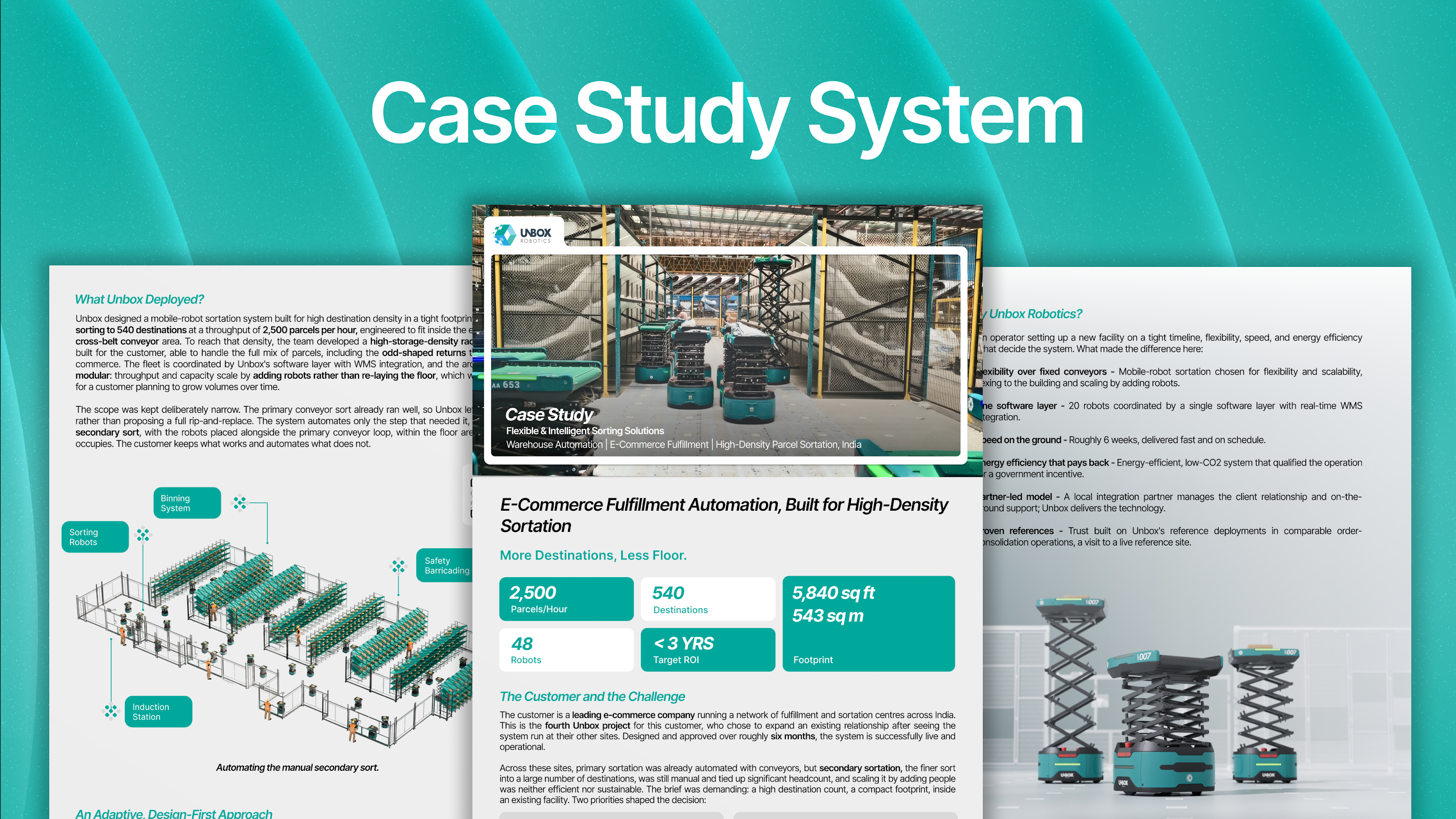
In this category the strongest argument is a working deployment. We designed one case study system that works as a digital PDF, a print piece and a film, applied it to new customer stories, and rolled it back across the existing ones: 36 designed pages and 9 films so far. Understanding what an operator wants to read, the problem, the layout, the throughput and the outcome, shaped the template more than any visual reference did.
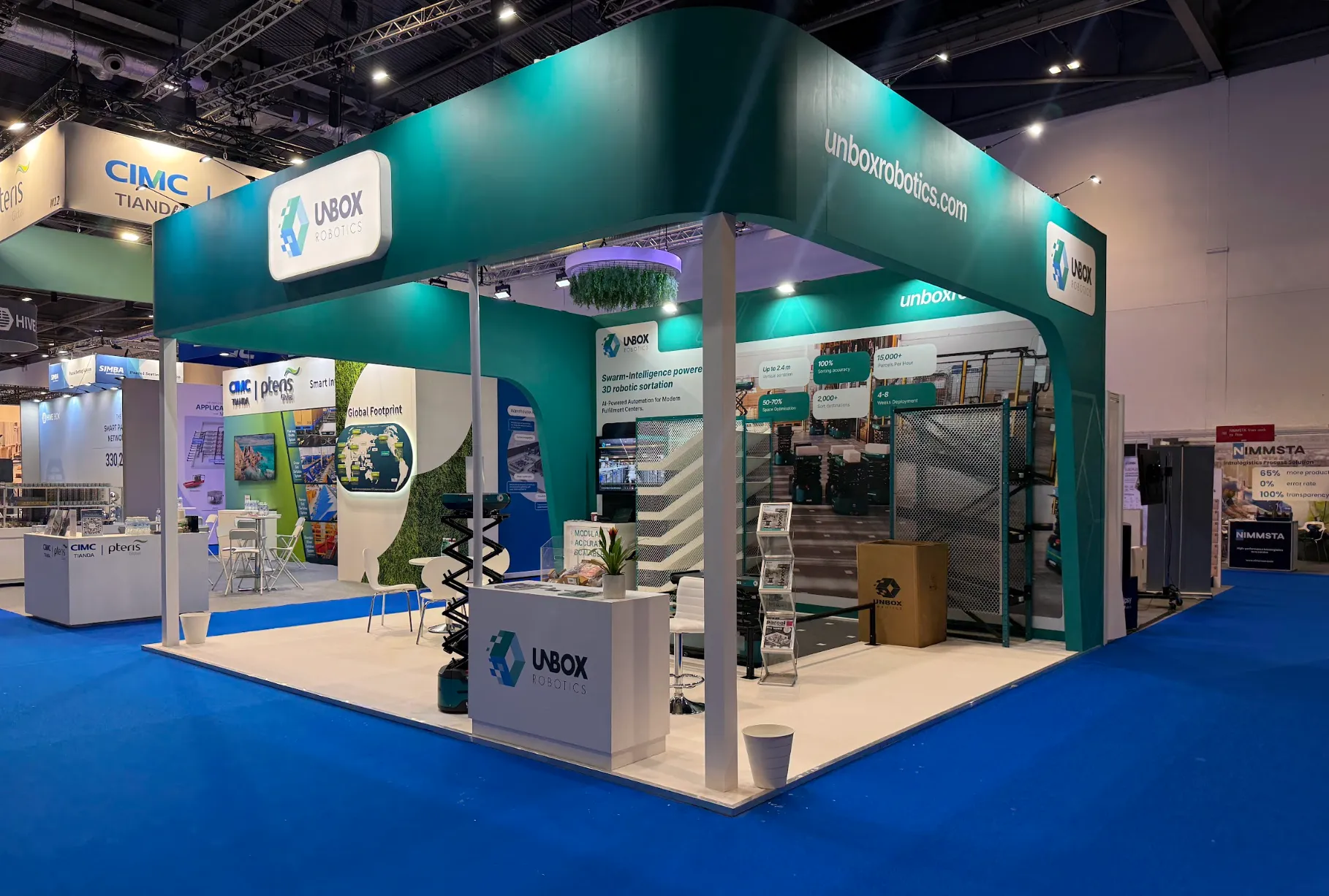
Unbox exhibits at the major logistics and intralogistics shows, and our work has covered Deliver, CeMAT, Modex, LogiMAT and Parcel & Post Expo: backdrops, booth layout, flyers, LinkedIn promotion before each show and event films after it. A visitor gives a stand seconds, not minutes. Knowing which questions logistics buyers walk up with let us decide what the backdrop says from across the aisle, what the flyer answers up close, and what the animations loop on screen while the sales team talks.
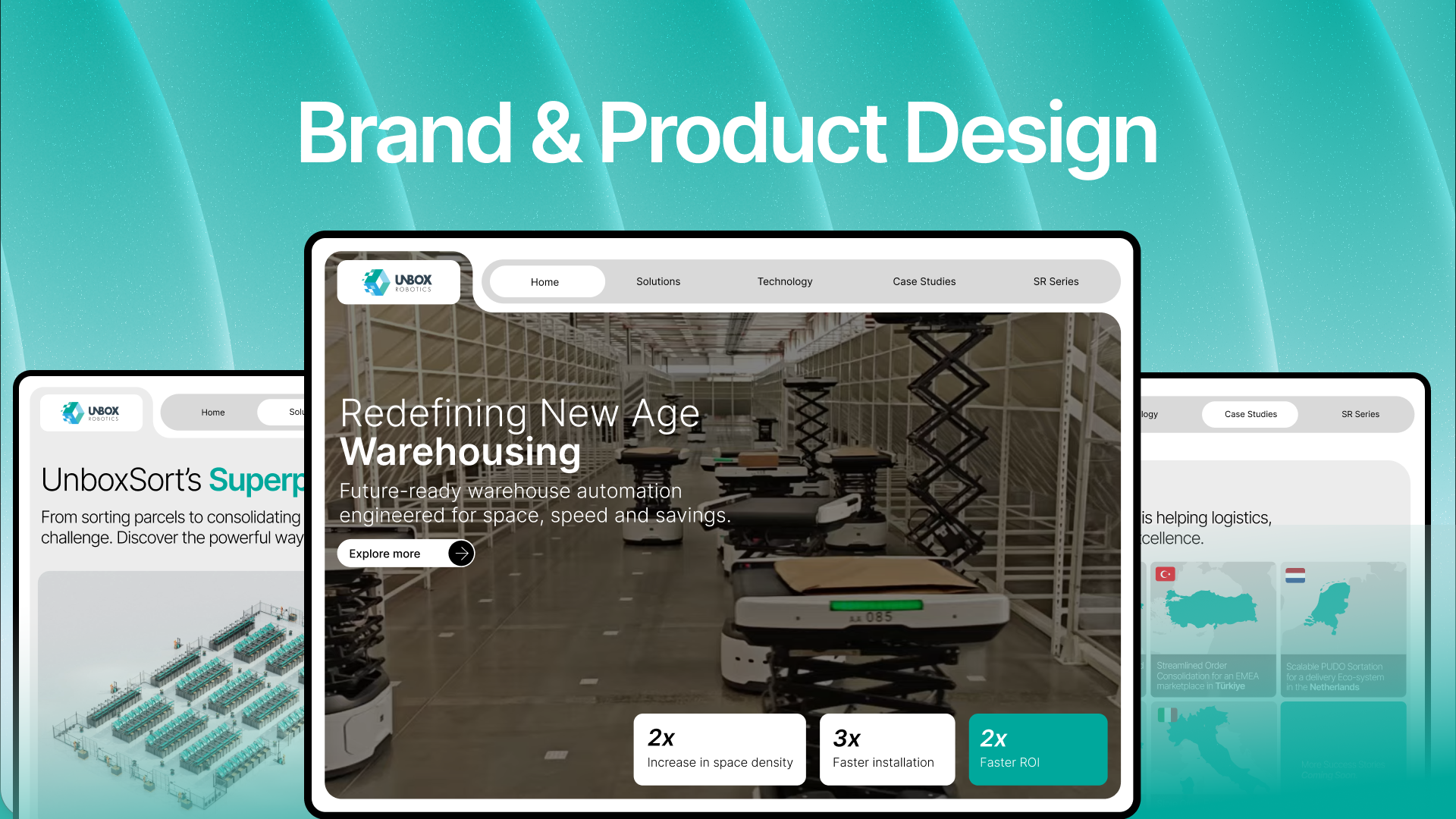
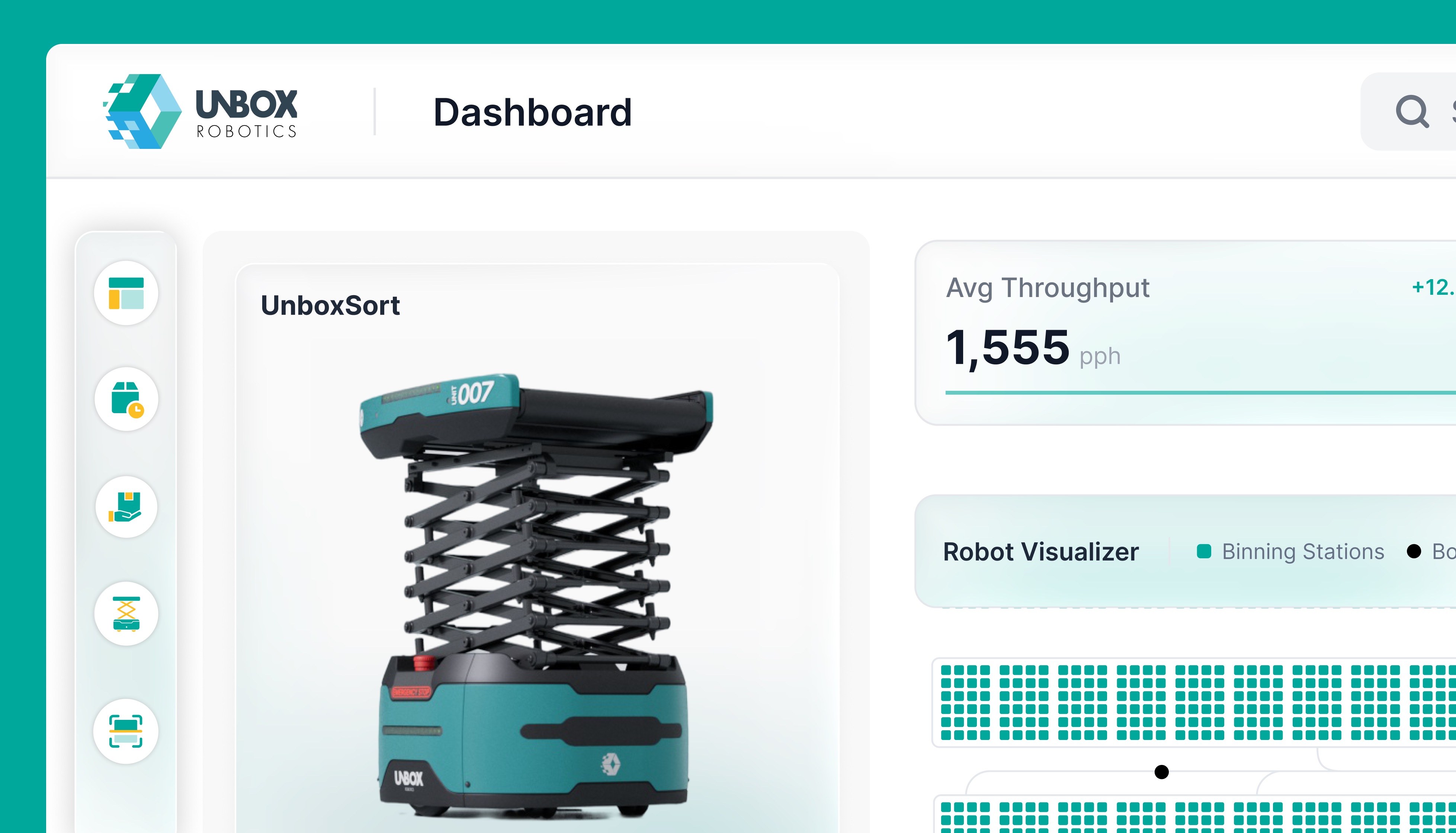
Between events, 33 LinkedIn and social assets kept Unbox's solutions in front of the market: educational carousels on order consolidation and space optimisation, campaign posts, a consistent thumbnail system for LinkedIn and YouTube, and edited solution videos including a short-form mid-mile piece. Alongside that, we refreshed the brand guidelines, redesigned the corporate deck, built a print-ready SOP board, redesigned five dashboard screens and prototyped an interactive microsite in Figma.
The dashboard and SOP work show where long-term understanding pays off most. Designing an operator-facing interface or a standard operating procedure board means knowing how the system is actually run on the floor, and that knowledge only accumulates over months of animating, rendering and explaining it.
Robotics and automation companies sell complex systems to cautious, technical buyers. The design that works for them is rarely the most spectacular. It is the most accurate, the most consistent and the most useful in a sales conversation. That only comes from understanding the industry as well as the product, and that understanding only comes with time.
If you are building a robotics or automation product and need a team that will learn your system as well as your brand, talk to us. The full scope of the Unbox work is in our case study.
More blog articles coming soon! Please keep checking this page for updates. The articles, commentary, technical breakdowns, and creative opinions expressed on this blog belong solely to the respective writers and creators. These insights are shared for informational, educational, and inspirational purposes only. Animation techniques, industry standards, software pipelines, and market trends change rapidly. Therefore, readers must exercise due diligence and verify technical or business strategies independently before applying them to their own creative pipelines or commercial operations.

